
Are you struggling to teach your child the Quran at home? Many parents want their children to learn Quranic morals, manners, and guidance but aren’t sure where to start. Understanding what the Quran is and why it matters gives parents the foundation they need before introducing Islamic teachings to young children. Understanding Quran teachings for kids is essential for building strong Islamic character, instilling values, and creating a lifelong love for learning the Quran. Many children face challenges such as short attention spans, difficulty memorizing verses, or lack of access to patient teachers, leaving parents unsure how to guide them effectively.
Quran teachings for kids focus on building strong character honesty, kindness, patience, respect, and gratitude through simple stories and practical examples. When taught correctly, these lessons help children connect with Allah, develop good manners, and build a lifelong love for the Quran.
In this guide, we will explore essential Quran teachings for children, practical tips on how to teach the Quran for kids, and how structured online learning can make this journey easier and more effective.
Pro Tip / Expert Reference:
Prophet Muhammad ﷺ said: “The best of you are those who learn the Quran and teach it” (Sahih al-Bukhari 5027). Teaching the Quran with patience and consistency ensures children not only memorize but also understand and live by its lessons.
What Are Quran Teachings for Kids?
Quran teachings for kids are lessons derived from the Quran that guide children in developing moral values, good behavior, and Islamic ethics. These teachings include practical lessons on honesty, patience, kindness, and respect, helping children understand the importance of following Allah’s guidance from a young age.
To better understand how these teachings are structured across the Quran, parents can also explore how the Quran is organized, which makes it easier to introduce these lessons to children in a systematic way.
For example, children learn to speak the truth, show empathy to others, and practice patience in daily life, all rooted in the Quran’s guidance. Understanding these lessons early is key to Quranic character building for kids and ensures they grow into responsible, ethical Muslims.
Supporting Keywords: Islamic teachings for kids, Quran lessons for kids, Quranic character building for kids
Pro Tip / Expert Reference:
The Prophet ﷺ said: “Convey from me even a single verse” (Sahih al-Bukhari 3461). This emphasizes the importance of teaching Quranic lessons, no matter how small, to build children’s character and instill lifelong values.
Why Quran Teachings Are Important for Children
Learning Quran teachings for kids early provides numerous benefits that shape their personality and Islamic character:
Builds Strong Islamic Character
Children develop good character in Islam by learning Quranic values such as honesty, patience, and respect. These lessons serve as the foundation for ethical behavior throughout life. For instance, encouraging children to tell the truth, even in difficult situations, reinforces honesty as a core value. You can also use Quran quotes about good character to teach children how Allah guides believers toward kindness, sincerity, and moral excellence.
Teaches Morals, Manners & Good Behavior
By understanding Quran teachings, kids learn Islamic manners for kids, kindness, and compassion. For example, teaching children to help others and speak politely fosters empathy and social awareness.
Encourages Respect, Patience, and Gratitude
Children learn virtues like patience in Islam and gratitude (shukr) that improve their relationships at home and school. Simple exercises like thanking Allah daily or waiting patiently for turns help instill these values practically.
Instills Love for Islam from a Young Age
Early exposure to the Quran strengthens faith and ensures children develop a connection with Allah and the Prophet ﷺ. Reading short Quran stories daily helps children relate lessons to their lives and fosters a spiritual bond.
Pro Tip / Expert Reference:
The Prophet Muhammad ﷺ said: “I was sent only to perfect good character.” (Muwatta Malik, Book 47, Hadith 8)
This hadith emphasizes that building character is one of the core purposes of Islam—making early Quranic teaching essential for children.
Essential Quran Teachings Every Child Should Learn
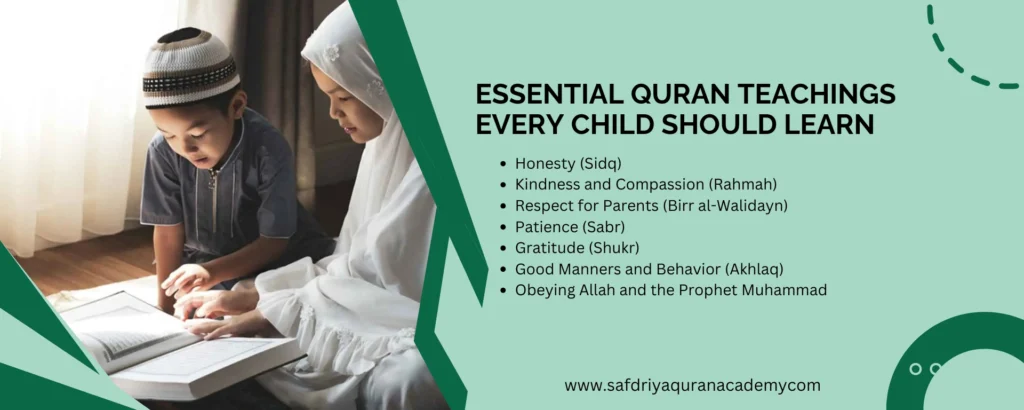
Teaching children Quran teachings for kids early helps them develop strong moral values, good behavior, and Islamic ethics. Below are key lessons every child should learn from the Quran, along with practical examples parents can use:
1. Honesty (Sidq)
Honesty is a core value in Islam. Encourage children to admit mistakes and tell the truth, even in small matters. Use Prophet stories for kids to demonstrate the importance of honesty, such as the story of Prophet Muhammad ﷺ emphasizing truthfulness in daily life.
2. Kindness and Compassion (Rahmah)
The Quran emphasizes kindness and caring for others. Teach children to help friends and siblings, share, and show empathy. Small acts like helping a neighbor or comforting a friend reinforce kindness in the Quran.
3. Respect for Parents (Birr al-Walidayn)
Respecting parents is central in Islam. Encourage children to follow instructions respectfully and express gratitude to parents. Use short stories or examples to illustrate the consequences of honoring parents versus disobedience.
4. Patience (Sabr)
Children learn patience through daily routines, waiting turns, and simple exercises. Narratives from the Quran, like the story of Prophet Yusuf, demonstrate patience in Islam under challenging circumstances.
5. Gratitude (Shukr)
Teach children to thank Allah for daily blessings. Simple exercises like listing three things they are grateful for each day help instill Quranic gratitude.
6. Good Manners and Behavior (Akhlaq)
Children develop Islamic ethics for children by practicing polite speech, sharing, and treating others respectfully. Use role-playing games or story-based lessons to reinforce these behaviors.
7. Obeying Allah and the Prophet ﷺ
Teach children the importance of following Quranic guidance and the Sunnah. Relate lessons to daily life so children can understand and apply the teachings practically. At this stage, many parents also help their children learn to read the Quran step-by-step, ensuring they build a strong foundation in both understanding and practice.
Pro Tip / Expert Reference:
Umar ibn al-Khattab (RA) said: “Teach your children and families good manners.”
This highlights the importance of developing Islamic character and manners from a young age.
Quran Stories That Teach Kids Important Lessons
Stories in the Quran help children learn morals in context and make abstract values relatable. Using these stories can reinforce honesty, patience, kindness, and respect while keeping children engaged and attentive.
Prophet Ibrahim: Trust in Allah
Teach children that relying on Allah in difficult situations brings comfort and strength. For example, explaining how Prophet Ibrahim trusted Allah when facing challenges helps children understand the importance of faith in daily life.
Prophet Yusuf: Patience and Purity
The story of Prophet Yusuf teaches patience and moral integrity. Encourage children to remain patient during challenges, avoid negative behavior, and trust Allah’s plan.
Prophet Nuh: Faith and Determination
Prophet Nuh’s unwavering faith and determination demonstrate perseverance. Children learn to stay steadfast in doing good deeds and maintaining their faith even when faced with difficulties.
Prophet Musa: Courage and Truth
Prophet Musa’s courage teaches children to stand for truth and justice. Parents can use this story to discuss the importance of honesty, fairness, and standing up against wrongdoing.
You can also introduce children to the story of Prophet Harun (AS), which highlights cooperation, leadership, and supporting others in doing good valuable lessons for building strong Islamic character.
Pro Tip / Expert Reference:
Allah says: “Indeed in their stories there is a lesson for people of understanding.” (Quran 12:111)
This verse confirms that Quranic stories are designed to teach wisdom, morals, and guidance.
Quran and Tajweed Learning for Kids
Learning Quran teachings for kids is incomplete without proper Tajweed and Arabic reading skills. Combining these ensures children recite the Quran correctly, understand meanings, and develop strong memorization skills.
Why Tajweed Is Important from a Young Age
Learning Tajweed basics for children ensures proper pronunciation, accurate recitation, and better understanding of Quranic verses. Starting early prevents mispronunciation and builds confidence in children’s recitation skills. Parents should also understand why Noorani Qaida is important for kids as a foundation before advancing to Tajweed.
Simple Tajweed Rules Kids Can Learn
Start with easy rules suitable for young learners:
- Madd (Elongation): Teach children to hold vowel sounds correctly.
- Noon Sakinah & Tanween: Show proper nasal pronunciation (Ghunna) in a fun, interactive way.
- Stopping and Pausing: Teach short pauses to improve understanding.
Arabic Reading Skills for Children
Teaching Arabic helps kids read the Quran accurately. Include Arabic teaching for kids to read the Quran as part of lessons. Use visual aids, flashcards, and interactive exercises to make learning engaging. Parents can also download Noorani Qaida PDF to practice at home with their children.
Pro Tip / Expert Advice:
The Prophet Muhammad ﷺ said: “Beautify the Quran with your voices.” (Sunan Abi Dawud 1468)
This encourages children to recite with proper Tajweed and love for the Quran.
How to Teach Quran Lessons to Kids (Parent Guide)
Teaching Quran teachings for kids effectively requires structure, patience, and creativity. Parents can use the following strategies to ensure children understand, enjoy, and retain Quran lessons:
1. Keep Lessons Short and Simple
Short sessions help maintain attention and retention. For young children, 10–15 minute daily sessions are most effective, ensuring focus without overwhelming them.
2. Use Stories and Examples
Relatable stories make Quran lessons easier to understand. Use Prophet stories for kids or real-life examples to illustrate morals like honesty, patience, and kindness.
3. Teach One Moral at a Time
Focus on a single lesson, such as honesty or compassion, before introducing another. Reinforce the lesson through daily reminders and practical activities.
4. Make Learning Fun and Interactive
Incorporate games, quizzes, roleplay, or drawing activities. Interactive learning encourages active participation and helps children internalize lessons.
5. Practice Daily Islamic Habits
Consistency in prayer, good manners, and reading the Quran ensures lessons are reinforced naturally. Encourage children to apply morals in daily life, not just memorize them. You can also teach kids how to pray (Salah) using our step-by-step guide to make learning practical and engaging.
Pro Tip / Expert Reference:
The Prophet Muhammad ﷺ said: “Make things easy and do not make things difficult.” (Sahih al-Bukhari 69)
This teaches parents to use patience, gentleness, and simplicity when teaching children Quran.
Benefits of Learning Quran Online for Kids
Learning Quran teachings for kids online offers modern families convenience, safety, and high-quality instruction. Online classes provide flexible, personalized learning that meets the needs of both children and parents.
1-on-1 Dedicated Quran Teacher
Personalized learning ensures each child receives guidance at their own pace. Children understand lessons better and retain memorization more effectively. Enroll your child in online Quran classes for kids to benefit from one-on-one attention from experienced teachers.
Flexible Timing for Parents
Online classes fit into busy family schedules. Parents can choose sessions that suit their child’s routine, making Quran learning stress-free.
Female and Male Teachers Available
Families can select teachers according to preference, ensuring comfort and cultural considerations are respected.
Learning at Home Easily & Safely
Children can learn in the comfort of their home with a patient teacher, reducing travel time and ensuring a safe environment.
Patient Teachers for Struggling Kids
Qualified teachers help maintain motivation and adapt lessons for children who may need extra attention or have a slower learning pace. Structured programs like the Quran reading course for kids provide targeted support to ensure every child progresses confidently.
Tajweed Benefits
Proper recitation and pronunciation are essential for understanding the Quran. Joining Quran recitation classes with Tajweed helps children master correct Tajweed rules from the start, making learning both accurate and enjoyable.
Pro Tip / Expert Reference:
The Prophet Muhammad ﷺ said: “Whoever guides someone to goodness will have a reward like the one who did it.” (Sahih Muslim 1893)
This highlights the value of teachers guiding children in Quran learning.
How Safdriya Quran Academy Helps Children Learn the Quran
Learning Quran teachings for kids is easier and more effective with the right guidance. Safdriya Quran Academy provides structured, interactive, and personalized online Quran teacher for kids classes designed for children of all ages.
Experienced and Patient Online Quran Teachers
Our teachers adapt lessons to each child’s learning pace, making Quran learning enjoyable and effective. Their experience ensures proper Tajweed, memorization, and understanding of Quranic morals.
Personalized Lessons for Each Child
Every child receives a tailored learning plan that suits their skill level, interests, and learning speed, ensuring maximum engagement and comprehension.
Tajweed-Focused Classes
Classes emphasize correct pronunciation, elongation, and recitation rules. Early Tajweed instruction builds confidence and prevents errors from becoming habits. Parents can also start their child on the Noorani Qaida course for beginners to build a solid foundation in Quran reading.
Free Trial Class Available
Parents can evaluate the teaching style and interact with teachers before enrolling, ensuring the program fits their child’s needs.
Flexible Schedule 24/7
Our online platform allows children to learn anytime, accommodating busy family schedules and ensuring consistent learning without stress.
Pro Tip / Expert Reference:
The Prophet Muhammad ﷺ said: “Whoever travels a path seeking knowledge, Allah makes the path to Paradise easy for them.” (Sahih Muslim 2699)
This reinforces the importance and reward of structured Quran learning.
Conclusion
Teaching Quran teachings for kids is essential for nurturing good character, instilling Islamic morals, and fostering a lifelong love for Allah from a young age. By combining Quran stories, moral lessons, and Tajweed practice, children not only memorize verses but also understand their meaning and apply values like honesty, patience, and kindness in daily life.
Many parents face challenges in keeping children engaged or ensuring proper recitation structured lessons with experienced and patient teachers can overcome these concerns effectively.
Pro Tip / Expert Reference:
The Prophet Muhammad ﷺ said: “The Quran is an intercessor—it is permitted to intercede and it is rightfully believed in.” (Sahih Muslim 804)
This reminds parents that Quran learning benefits their children in this life and the Hereafter.
FAQ
Have questions about Quran Teachings for Kids


