
Learning Quran during menstruation can feel challenging for many Muslim women. Questions about whether it’s permissible to read, recite, or touch the Quran often leave learners unsure of the right steps.
The good news is that continuing your Quran study during menstruation is entirely possible with the right approach. When you have a clear understanding of what the Quran is and its purpose in a believer’s life, learning does not stop with physical limitations. Based on scholarly guidance, women can maintain their Quran journey through translations, audio recitations, memorization, and reflective study, even if direct Mushaf recitation is limited.
This guide will help you:
- Learn practical tips for Quran study during menstruation
- Discover spiritual alternatives to maintain a strong connection with Allah
- Understand what is permissible according to Islamic scholarship
By the end of this post, you’ll know exactly how to stay spiritually connected and continue progressing in your Quran learning without interruptions.
Can Women Learn the Quran While on Their Period?
Understanding What Is Permissible
For Muslim women, Quran study during menstruation is not only possible but encouraged through alternative methods. While direct recitation from the Mushaf may have limitations, learning and understanding the Quran is always allowed. Many scholars agree that women can continue their spiritual journey safely using these methods especially by focusing on foundational learning approaches that help women continue learning the Quran step by step, even when physical recitation is limited.
- Study translations and tafsir – use trusted apps, websites, or books to understand meanings.
- Memorize surahs you already know – review short surahs daily to keep them fresh in memory.
- Use audio Quran or online classes – listen and repeat verses to maintain fluency without direct Mushaf recitation.
Practical Tips to Continue Learning
- Break your study into short daily sessions (5–15 minutes) for consistency.
- Use apps or audio lessons to listen, repeat, and reflect on verses.
- Focus on understanding meanings rather than physical recitation if needed.
- Pair learning with reflection or journaling to enhance comprehension and spiritual connection.
- Tip: Staying consistent, even with small steps, helps you maintain both learning progress and a spiritual connection with Allah.
Can I Read or Recite Quran During My Period?
What Is Allowed
It’s natural to wonder about the rules of reciting Quran while menstruating. According to many Islamic scholars, direct recitation from a Mushaf may not be permitted during menstruation. However, you can continue your Quran connection in these ways:
- Listening to the Quran – use trusted Quran audio apps to follow along and reflect.
- Reciting from memory – if you have memorized portions of the Quran, you may recite them aloud.
- Reading translations and tafsir – understand the meanings and context of verses without touching the Mushaf.
Alternatives to Traditional Recitation
Even if physical recitation is restricted, you can maintain your practice through these women Quran recitation tips:
- Use Quran audio apps for guided listening and repetition; this is especially helpful when following structured online Quran Tajweed classes, where correct pronunciation and listening-based learning are emphasized.
- Study translations and tafsir to deepen comprehension and strengthen your connection with the meanings of the Quran.
- Practice memorization or review of previously learned surahs, either by writing them down or listening repeatedly to trusted reciters.
- Tip: It can feel frustrating to pause traditional recitation, but focusing on listening, understanding, and memorization keeps your spiritual connection strong.
How to Remember Allah During Menstruation
Even if you cannot physically recite the Quran during menstruation, there are many ways to maintain a strong spiritual connection. Remembering Allah on your period can be simple, consistent, and deeply fulfilling.
Simple Daily Practices
- Engage in dhikr (zikr) and tasbih – repeat Allah’s names and phrases like SubhanAllah, Alhamdulillah, Allahu Akbar several times a day.
- Reflect on Quran translations or daily verses – reading or listening to meanings, including inspiring Quran quotations for faith and strength, helps internalize guidance and maintain spiritual motivation.
- Meditate on Allah’s names and attributes – spend a few minutes contemplating His mercy, power, and wisdom.
Spiritual Connection Without Recitation
- Make dua regularly – speak to Allah from your heart, asking for guidance, forgiveness, and blessings.
- Practice silent reflection and journaling – note thoughts, gratitude, or insights from your Quran study or daily experiences.
- Connect spiritually even without reciting aloud – listening to Quran audio, memorization, and studying translations all strengthen your connection.
- Tip: Consistency is key. Even a few minutes daily of dhikr, dua, or reflection can help you feel spiritually connected and motivated during your period.
How Do I Make Dua If I’m on My Period?
Many women wonder about making dua during menstruation and which Islamic supplications for menstruating women are recommended. The good news is that your spiritual connection can remain strong even during your period.
Step-by-Step Guide
- Find a quiet moment for reflection – choose a calm space to focus on your heart and mind.
- Raise your hands in sincerity and ask Allah for guidance, forgiveness, and blessings.
- Use short, meaningful supplications if time is limited – even a few words from the heart are sufficient.
- Optional: write your dua in a journal to remember your intentions and reflect later.
Maintaining Consistency
- Set daily reminders for dua and reflection to make it a consistent practice.
- Combine dua with listening to Quran translations for a deeper spiritual connection.
- Pair with dhikr or short meditation sessions to enhance mindfulness and focus.
- Tip: Even a few minutes of sincere dua every day can maintain your spiritual connection and provide peace during menstruation.
Can I Touch the Quran on My Period with Gloves?
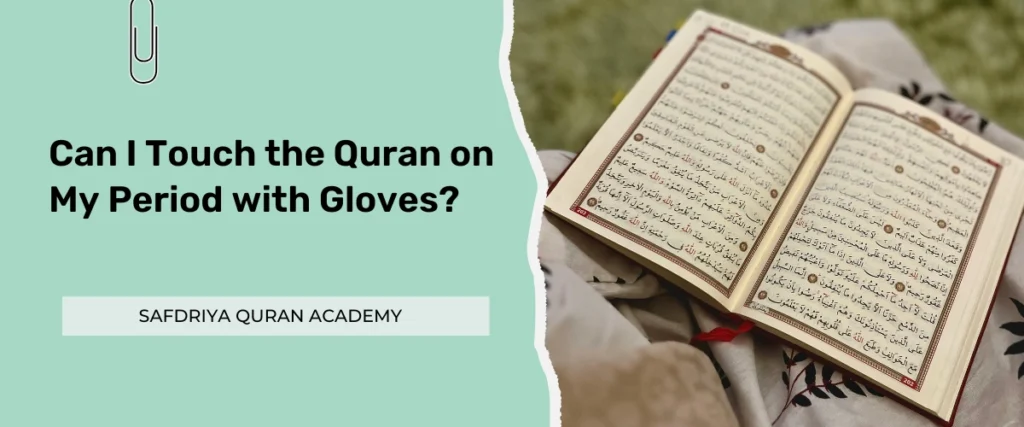
Many women wonder about touching Quran during menstruation and whether using gloves is permissible. According to scholars, some allow touching the Quran with clean gloves, while others recommend using digital or printed copies during menstruation to avoid direct contact with the Mushaf.
Practical Tips
- Use Quran apps or PDFs to study the Quran digitally to stay consistent without physical contact, especially when following a structured approach designed for self-paced learners, such as those who prefer to learn Quran online step by step as an adult.
- Focus on listening, writing, and memorizing review surahs by listening to audio recitations, writing down meanings, or revising previously memorized verses to maintain continuity in learning.
- Combine study with reflection even without touching the Mushaf, you can maintain deep understanding and a strong spiritual connection by reflecting on meanings and applying lessons to daily life.
- Tip: Digital Quran platforms, audio recitations, and guided online learning resources make it easy to continue your Quran study safely and effectively during your period.
Tips to Continue Learning Quran During Menstruation
Even during menstruation, women can maintain progress and stay spiritually connected by using the right tools and strategies. Learning Quran during menstruation becomes easier with structured approaches and practical resources.
Tools and Resources
- Quran apps, audio recitations, and online Quran classes for women – use trusted digital platforms to continue study without touching the Mushaf.
- Digital Mushaf or PDF versions – easily accessible for reading, memorization, and study at home or on the go.
- Audio and translation tools – enhance comprehension and retention while listening or following along.
Memorization and Writing Practices
- Write meanings of verses – strengthen understanding and internalize lessons.
- Memorize short surahs or review previously memorized sections – focus on small, consistent portions for better retention.
- Practice reflection – pair memorization with brief reflections on the meanings to deepen connection.
Time Management for Daily Learning
- Schedule short, consistent sessions – even 5–15 minutes daily keeps your Quran study on track.
- Use small breaks during the day – listen to Quran audio or review translations when free.
- Create a routine – combining short study, memorization, and reflection ensures steady progress without overwhelming yourself.
- Tip: Even with limitations on physical recitation, structured study and reflection allow you to stay spiritually connected and make consistent progress in your Quran learning.
Conclusion
Menstruation does not have to interrupt your Quran learning journey. By using audio recitations, memorization, translations, and reflective practices, women can continue making progress while maintaining a strong spiritual connection with Allah. Learning Quran during menstruation can be consistent, meaningful, and enriching if approached with the right strategies.
Remember: Small, daily efforts whether listening to Quran, reviewing memorized surahs, or reflecting on meanings can keep your spiritual journey active and rewarding.
Frequently Asked Questions
Have questions about Learning Quran During Menstruation


