Reciting the Quran correctly is a true blessing and an important part of every Muslim’s daily life. But many learners often wonder why the Quran can be recited in different ways and what exactly types of qiraat means.
In this guide, we’ll walk you through:
- The 7 authentic ways to recite the Quran
- How each qiraat differs in pronunciation and style
- Common questions learners have, like which qiraat to start with and whether these differences change the meaning of the Quran
- Tips on learning qiraat effectively with guidance from experienced reciters
If you’re new to Quran recitation, it’s helpful to learn the basics of reading the Quran first. This foundation makes understanding and practicing the different qiraat much easier.
By the end, you’ll have a clear understanding of the rich tradition of Quranic recitation and know how to begin learning confidently.
Qiraat Meaning in Islam
The word qiraat (also spelled qira’at or qira at) refers to the different modes or styles of reciting the Quran. Each qiraat preserves the exact words of the Quran but may vary slightly in pronunciation, dialect, and intonation. Understanding the types of qiraat in Islam helps learners appreciate the rich oral tradition and the care taken to preserve the Quran across generations.
For beginners, learning the basics of Quranic reading through Noorani Qaida can provide a strong foundation before progressing to different qiraat styles.
Key points about qiraat:
- Qirat meaning: A way or style of Quranic recitation, passed down by certified teachers and scholars.
- Preserves authenticity: The Quran’s words remain the same, even with regional or stylistic differences.
- Scholarly validation: All recognized qiraat are verified and authenticated by Islamic scholars, ensuring accurate transmission.
By understanding these styles, learners can begin their Quran journey with confidence, knowing that each qiraat is authentic and preserves the divine message.
What Is Qiraat in the Quran?
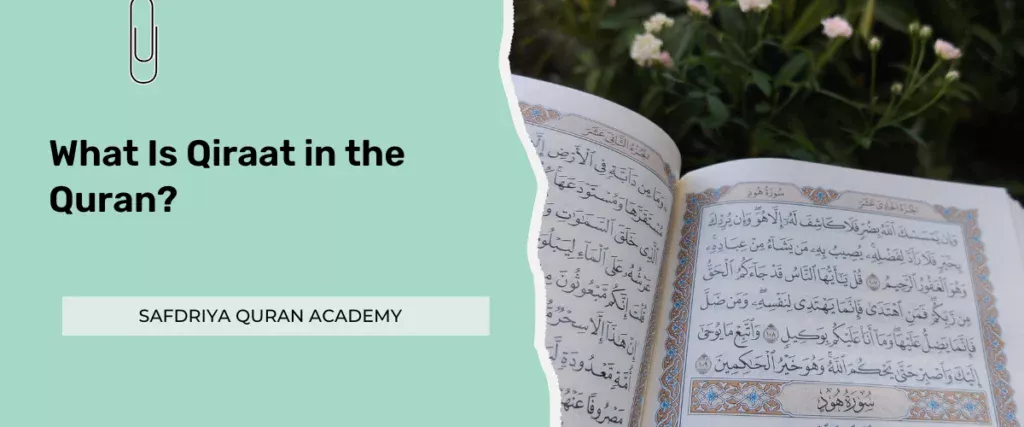
Types of qiraat al Quran refer to the various accepted ways of reciting the Quran, each taught by renowned and certified reciters. These recitations have been preserved through precise isnad (chains of narration) to ensure that every word remains authentic and accurate.
Key points about Quranic qiraat:
- Reciters: Each qiraat is associated with a certified reciter, ensuring the recitation follows authentic transmission. Learners who want to master correct pronunciation and tajweed can benefit greatly from structured guidance in online Quran tajweed classes.
- Quran recitation variations: Differences between qiraat are minor, mostly in pronunciation, dialect, or intonation, and do not change the meaning of the Quran.
- Types of Quran qiraat: 7 main qiraat are widely recognized, while additional recitations expand the total to 10, offering learners a deeper understanding of Islamic recitation traditions.
By learning the types of qiraat, students can confidently recite the Quran knowing that each style is authentic, preserved by scholars, and reflects the rich oral tradition of Islam.
How Many Types of Qiraat Are There?
Many learners often ask: “How many types of qiraat are there?” The answer depends on the level of detail you’re looking for.
- 7 qirat of Quran: These are the most widely studied and taught around the world. They form the foundation of Quranic recitation for most learners.
- 10 types of qiraat: In addition to the 7, there are 3 more recognized by scholars. These are mostly studied by advanced students or scholars to deepen their understanding of Quranic recitation.
- Clarifying a common confusion: Some learners wonder, “Are there different versions of the Quran?” The Quran itself is one; the differences are only in recitation styles. To learn more about this and how recitation relates to Quran versions, check out our guide on different versions of the Quran.
For beginners, it’s usually recommended to start with Hafs an Asim, the most widely taught qiraat, before exploring others. This ensures a strong foundation in correct pronunciation and tajweed.
What Are the 7 Types of Qiraat?
The types of qiraat represent the 7 authentic ways to recite the Quran, each preserved and transmitted by certified reciters. While the text of the Quran remains the same as explained in How is the Quran Organized? Structure and Divisions every qiraat has slight differences in pronunciation and intonation, reflecting the rich oral tradition.
Names of the 7 Qiraat and Their Reciters
- Hafs an Asim – The most widely taught qiraat worldwide, known for its clear and easy-to-follow pronunciation, making it ideal for beginners and widely used in Quran classes.
- Warsh an Nafi – Commonly recited in North Africa, it features distinct vowel sounds and rhythm, helping learners memorize smoothly while maintaining authentic transmission.
- Qalun – Taught alongside Warsh, Qalun is popular in Libya and Tunisia, offering learners a slightly different pronunciation style while preserving the Quran’s meaning.
- Ibn Kathir – A traditional and authentic qiraat, respected for its historical transmission and maintained carefully by certified scholars for accurate recitation.
- Abu Amr – Mainly used in Yemen and Sudan, this qiraat is known for its smooth recitation style and clear pronunciation of vowels, making it distinctive and memorable.
- Asim – Serving as the base for Hafs, Asim qiraat is historically significant and widely studied, offering learners a strong foundation in Quranic recitation.
- Al-Kisai – Popular in Iraq, this qiraat is preserved by scholars, featuring a clear and structured style that is ideal for both learning and teaching purposes.
10 Types of Qiraat - A Broader View
Beyond the 7 qiraat, scholars recognize 10 types of qiraat, which include additional reciters. Learning these can provide a deeper understanding of classical Quranic recitation styles.
Key Points About the 10 Types of Qiraat:
- 10 types of qiraat include 3 additional reciters beyond the 7 main ones, recognized by scholars, and often studied by advanced students or researchers.
- 10 different types of qiraat offer subtle variations in pronunciation and intonation, allowing learners to appreciate the richness and authenticity of Quranic recitation.
- Beginners usually start with Hafs an Asim, as it is the most widely taught and accessible qiraat, providing a strong foundation before exploring other recitation styles. For those looking to learn the Quran step by step as an adult, this structured approach can help gradually master different qiraat with confidence.
Different Types of Qiraat - Why Do They Exist?
The different types of qiraat exist to preserve the Quran while accommodating variations in language and recitation. Understanding these reasons helps learners appreciate the rich oral tradition.
- Dialectical variations: During the Prophet ﷺ’s time, Arabic was spoken in different dialects, which influenced pronunciation, recitation style, and intonation across regions.
- Pronunciation differences: Arabic letters can have subtle variations in articulation, so multiple qiraat developed to maintain proper phonetics without changing meaning.
- Transmission by companions: The companions of the Prophet ﷺ taught the Quran in ways that suited their communities, ensuring accurate preservation through certified chains of narrators.
- Oral tradition preservation: The Quran was passed down orally, and slight recitation variations enriched the teaching, memorization, and understanding of the Quran without altering the text.
These differences do not change the meaning of the Quran; instead, they enhance its beauty and offer multiple ways to recite it correctly.
Ajibtu and Ajanta Quran Qirat Difference (Example Explained)
Many learners ask: “What is the difference between Ajibtu and Ajanta in Quran qirat?”
Here’s a clear explanation.
- Ajibtu: Recited according to one certified qiraat, following proper pronunciation and tajweed rules, preserving authentic transmission.
- Ajanta: Recited in a different qiraat, with minor pronunciation and intonation variations, but the meaning remains unchanged.
- Meaning remains the same: Both pronunciations convey the exact Quranic message without altering the text.
- Why it matters: Understanding these differences ensures your recitation is correct, aligns with authentic oral tradition, and prepares learners for advanced qiraat studies.
Overview: Ajibtu and Ajanta are two qiraat pronunciations; differences are minor and only affect style, not meaning, highlighting the importance of learning qiraat properly
Qiraat vs Tajweed - Are They the Same?
Understanding the difference between qiraat and tajweed is important for accurate Quranic recitation and building confidence as a learner.
- Qiraat: Refers to the different accepted styles or modes of reciting the Quran, each transmitted by certified reciters and preserved with authentic isnad chains.
- Tajweed: Refers to the rules of pronunciation, articulation, and letter characteristics that ensure every word of the Quran is recited correctly and beautifully.
- Learning both: Mastering qiraat and tajweed together ensures your recitation is authentic, clear, and free of mistakes, while preserving the Quran’s meaning and beauty.
Overview: Qiraat are the different Quranic recitation styles, while tajweed governs pronunciation rules. Learning both ensures accurate and authentic recitation.
How to Learn Different Types of Qiraat Properly
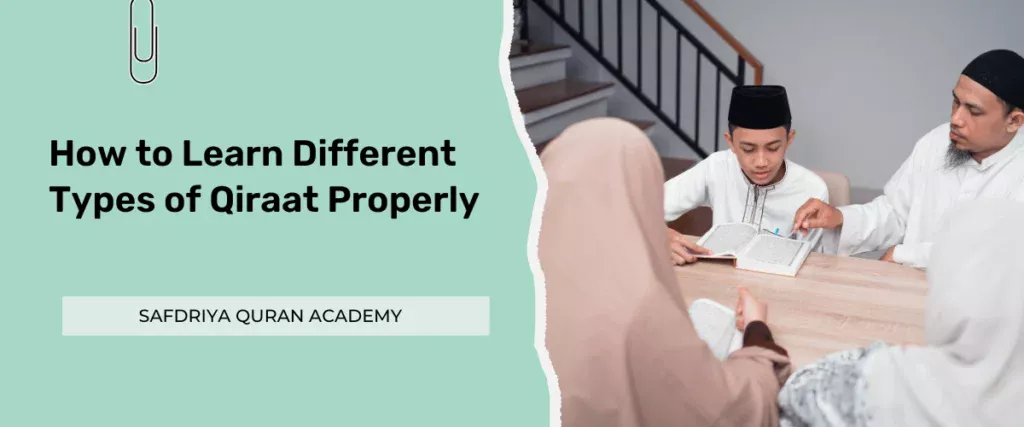
Learning the types of qiraat requires accuracy, patience, and authentic guidance. Following the right method helps learners avoid confusion and build confidence.
- Learn under qualified Quran teachers: Studying with certified teachers ensures correct transmission, proper pronunciation, and adherence to authentic qiraat through trusted scholarly chains. You can find structured guidance through online Quran courses that teach qiraat step by step.
- Use reliable audio references: Listening to authentic recitations on platforms like Quranicaudio helps learners hear correct pronunciation and compare qiraat accurately.
- Practice one qiraat at a time: Focusing on a single qiraat prevents mixing styles, strengthens memorization, and builds a solid foundation before moving to advanced recitations.
- Follow structured learning programs: Step-by-step online Quran classes help learners progress gradually while receiving corrections and guidance from experienced instructors.
Overview: Learn qiraat with qualified teachers, use authentic audio sources, practice one style at a time, and follow structured guidance for accurate recitation.
Are All Types of Qiraat Authentic?
Yes, all recognized types of qiraat are authentic and have been carefully preserved through scholarly verification and transmission.
- Strict scholarly chains: Every authentic qiraat follows a verified isnad (chain of narration), ensuring it was taught and preserved by qualified scholars across generations.
- Exact Quranic text preserved: Qiraat differences never change the Quran’s words or meaning; they only affect pronunciation, articulation, or recitation style.
- Rich oral tradition: These recitation styles reflect the diverse oral traditions present in early Islam while maintaining complete textual accuracy and unity.
Overview: All authentic qiraat are preserved through verified scholarly chains, maintain the same Quranic text, and represent the trusted oral tradition of Islam.
Conclusion
Understanding the types of qiraat helps learners appreciate the richness and authenticity of Quranic recitation. Each qiraat is preserved through verified scholarly chains, maintains the same Quranic text, and reflects the trusted oral tradition of early Islam.
For beginners, starting with Hafs an Asim provides a strong foundation, while advanced learners can explore other qiraat to deepen pronunciation and recitation mastery. Learning under qualified Quran teachers ensures accuracy, prevents mistakes, and supports steady progress.
With the right guidance, patience, and consistency, mastering different qiraat becomes a rewarding journey that strengthens both recitation skills and connection with the Quran.
Frequently Asked Questions
Have questions about Learning Quran During Menstruation


