
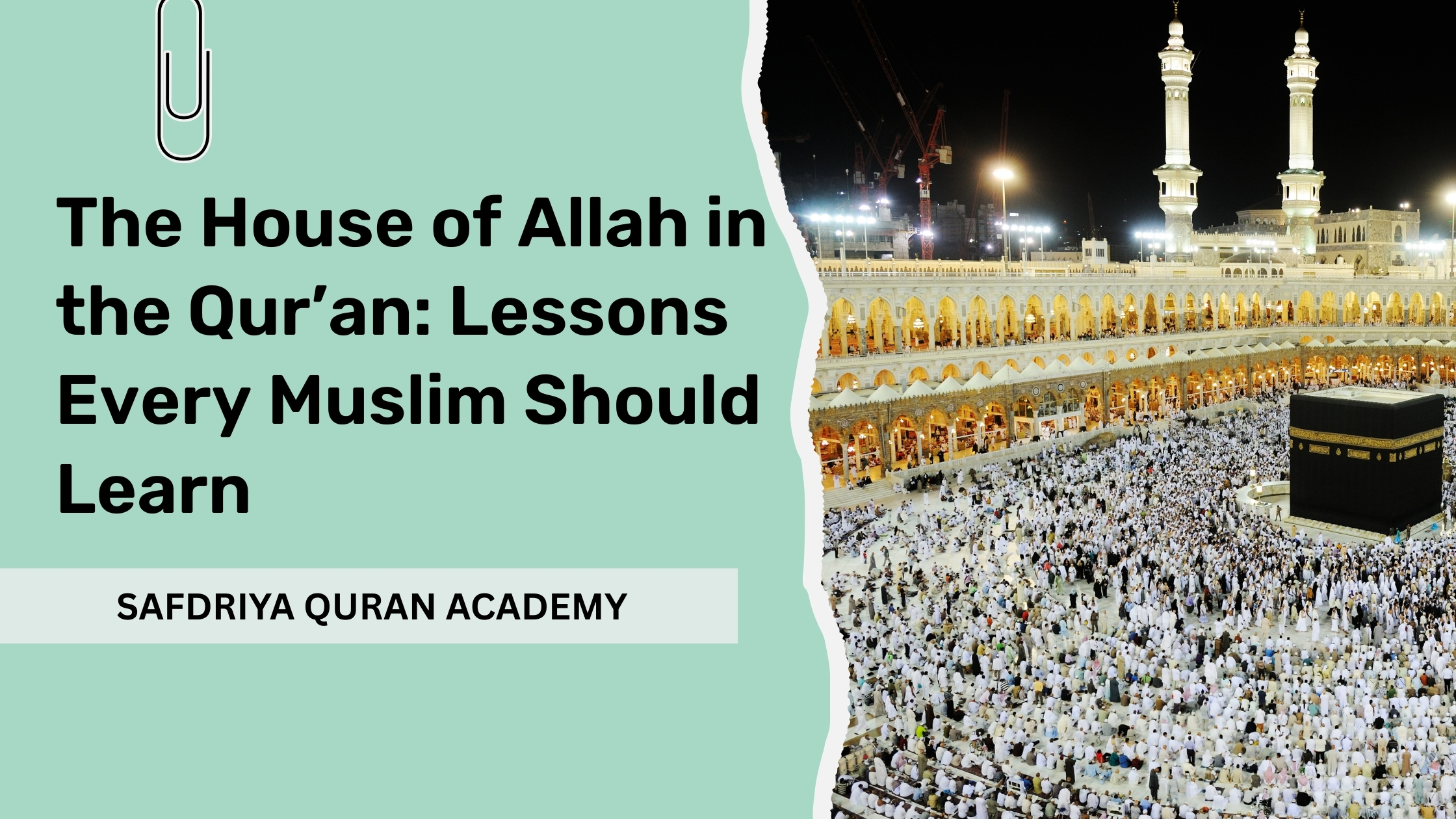
The House of Allah, also known as Baytullah, is the sacred cubic structure at the heart of Makkah. As the first house of worship established for humanity, it holds unmatched spiritual significance for Muslims worldwide. The Kaaba is far more than a physical building; it embodies unity, devotion, and submission to Allah, serving as a central point of focus for prayers and pilgrimage.
Understanding the House of Allah in the Qur’an provides profound lessons for every believer, guiding them in spiritual growth, moral conduct, and connection with the Ummah. By learning about this sacred site, Muslims can strengthen their faith and appreciate the divine wisdom behind its symbolism.
In this blog, you will discover key lessons from the House of Allah, including:
- The spiritual significance of the Kaaba and its role in Islam
- How the House of Allah unites the Ummah across the world
- Lessons in equality, humility, and devotion for every believer
Whether you are curious about the history, the Qur’anic references, or planning your spiritual journey, this guide will help you connect deeply with the House of Allah. For those considering pilgrimage, including Umrah 2026 packages from the UK, this knowledge enriches your experience with understanding and devotion.
What Is the House of Allah and Its Spiritual Significance?
The House of Allah, also called Baytullah, is the holiest site in Islam, symbolizing a direct connection with Allah. More than just a physical structure, the Kaaba represents unity, submission, and moral guidance for all believers. It stands as a beacon of faith and devotion, reminding Muslims of their shared spiritual journey and purpose in life.
Understanding the spiritual significance of the House of Allah offers important lessons for every Muslim. Whether you are reflecting on its meaning or preparing for pilgrimage, the Kaaba teaches profound values that transcend generations and geographies.
Key lessons from the House of Allah include:
- Connection to Allah: Strengthening faith through prayer and devotion
- Unity of the Ummah: Serving as a central point of focus for Muslims worldwide
- Humility and Submission: Encouraging believers to live with moral integrity and humility
- Spiritual Growth: Inspiring reflection on one’s intentions, actions, and relationship with Allah
The Quran emphasizes the importance of the Kaaba as a place of guidance and spiritual connection:
“Indeed, the first House of worship established for mankind was that at Bakkah – blessed and a guidance for the worlds.”(Surah Aal-e-Imran 3:96)
By contemplating the House of Allah and its teachings, believers can cultivate a deeper understanding of their faith, strengthen their spiritual discipline, and experience the profound unity and devotion exemplified by Muslims around the world.
The House of Allah: First House of Worship for All Humanity
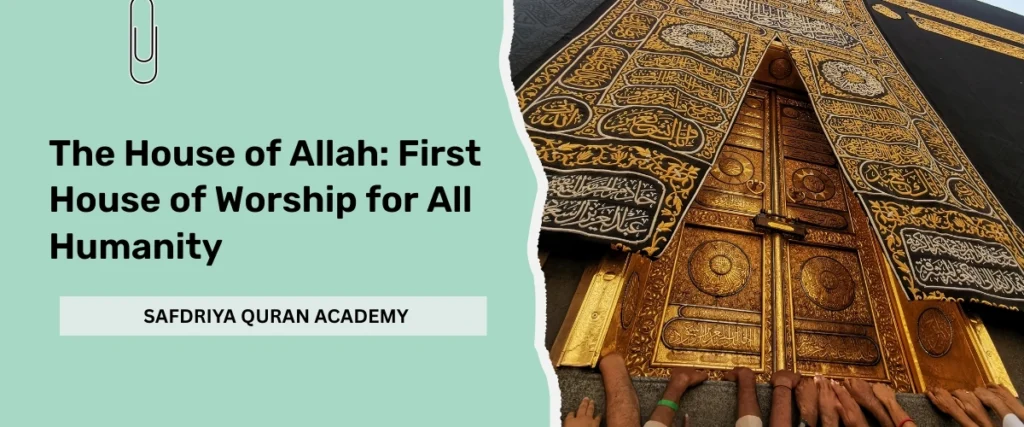
Did you know that the Kaaba, the House of Allah, is the first house of worship established for mankind? Its foundation predates Islam and has remained a central symbol of faith and devotion for generations. According to Islamic tradition, it was originally built by Prophet Ibrahim (AS) and Prophet Ismail (AS) in obedience to Allah’s command. For more insights into the lives, roles, and leadership lessons of Islamic prophets like Ibrahim (AS), you can explore Harun AS: Life, Role, and Leadership Lessons in Islam.
The Quran emphasizes its universal significance:
“Indeed, the first House of worship established for mankind was that at Bakkah – blessed and a guidance for the worlds.”(Surah Aal-e-Imran 3:96)
This verse highlights that the House of Allah is not limited to a single tribe or nation it was created for all of humanity. It represents the core of monotheism, guiding people to worship one God and promoting unity among believers.
Key points about the House of Allah as the first house of worship:
- Built by Prophet Ibrahim (AS) and Prophet Ismail (AS): Fulfilling Allah’s divine command
- Universal purpose: A house of worship for all people, across generations and nations
- Symbol of monotheism: Reinforces belief in one God, uniting all believers
- Spiritual guidance: Provides lessons on faith, devotion, and moral conduct
Understanding the House of Allah as the first house of worship helps believers connect with its spiritual significance. It reminds us that the Kaaba is not only a historical structure but also a living symbol of divine guidance and unity that continues to inspire Muslims around the world today.
How the House of Allah Unites the Ummah
One of the most visible symbols of unity in Islam is the Qibla, the direction every Muslim faces during prayer. Regardless of where they are in the world, all believers turn toward the House of Allah five times daily, forming a spiritual connection with millions of fellow Muslims across continents. This act not only fulfills a religious obligation but also symbolizes shared faith, equality, and devotion among the Ummah.
The Quran commands:
“So turn your face toward Al-Masjid Al-Haram. And wherever you are, turn your faces toward it.”(Surah Al-Baqarah 2:144)
The House of Allah serves as a unifying force, transcending social, cultural, and economic differences. Whether ruler or servant, every Muslim focuses on the same sacred landmark, creating a collective sense of spiritual harmony and equality.
Key lessons from the House of Allah in uniting the Ummah include:
- Shared Spiritual Direction: All Muslims face the Kaaba during prayer, reinforcing collective worship
- Equality Before Allah: Status, wealth, and nationality do not matter; only faith and devotion count
- Global Connection: Muslims around the world are spiritually linked through the Kaaba
- Unity of Purpose: Encourages moral guidance, collaboration, and mutual respect among the Ummah
Historically, the Qibla direction has shifted to reflect divine guidance, demonstrating the Kaaba’s enduring role in uniting believers. Today, it continues to inspire a sense of belonging and spiritual solidarity for Muslims, whether during daily prayers, Hajj, or Umrah pilgrimage.
By understanding the House of Allah as a center of unity, believers can cultivate spiritual empathy, cooperation, and shared purpose, reinforcing the timeless lessons of the Quran for the global Muslim community.
Lessons of Equality and Humility at the House of Allah
The House of Allah is a powerful teacher of equality and humility. In the eyes of the Creator, all believers are equal regardless of wealth, social status, or worldly power. What truly matters is righteousness, intentions, and deeds, as highlighted in the Quran:
“Indeed, the most noble of you in the sight of Allah is the most righteous of you.”(Surah Al-Hujurat 49:13)
During Hajj and Umrah, pilgrims wear Ihram, a simple white garment that removes any distinctions of status or wealth. Standing before the Kaaba, every Muslim experiences a profound sense of humility, devotion, and spiritual equality, embodying the Quranic principles of fairness, moral integrity, and submission to Allah.
Key lessons in equality and humility from the House of Allah include:
- Equality Before Allah: Everyone is judged by their faith and deeds, not by worldly status
- Humility Through Worship: Pilgrims wearing Ihram symbolically strip away pride and material distinctions
- Moral Integrity: Standing before the Kaaba reinforces sincerity, intention, and devotion
- Spiritual Unity: Shared experiences during pilgrimage strengthen the bond among all believers
These lessons remind Muslims to focus on spiritual growth and righteous actions, rather than worldly possessions or social recognition. The House of Allah is a timeless symbol, teaching that true nobility comes from piety, humility, and devotion to Allah, uniting believers in faith and moral values.
The House of Allah: A Gathering Place for Believers
The House of Allah, or Kaaba, serves as a central gathering point for Muslims from every corner of the world. During Hajj and Umrah, millions of believers come together, creating a spiritual environment of peace, unity, and devotion. This sacred congregation exemplifies the true essence of the Ummah, where faith transcends nationality, wealth, and social status.
The Quran describes the Kaaba as:
“And [mention] when We made the House a place of return for the people and [a place of] security.”(Surah Al-Baqarah 2:125)
Visiting the House of Allah allows Muslims to experience a deep spiritual connection with Allah, while also strengthening the bond of the Ummah. Standing together in prayer and performing rituals fosters collective unity, reminding believers of their shared purpose and devotion.
Key spiritual lessons from the House of Allah as a gathering place include:
- Unity of the Ummah: Millions of Muslims come together in one place, sharing faith and devotion
- Peace and Spiritual Security: Pilgrims feel protected and spiritually connected to Allah
- Collective Devotion: Shared rituals reinforce moral and spiritual discipline among believers
- Global Connection: Believers from diverse backgrounds experience a sense of belonging and shared purpose
By understanding the House of Allah as a gathering place, Muslims can appreciate the collective strength, spiritual connection, and unity that it inspires, making every pilgrimage or prayer a transformative experience of faith and community.
Conclusion
The House of Allah is not just a physical structure it is a timeless symbol of faith, unity, and devotion. By reflecting on its lessons of humility, equality, and spiritual connection, every Muslim can strengthen their bond with Allah and embrace the Quranic guidance in daily life. Whether through prayer, pilgrimage, or learning the Quran, the House of Allah continues to inspire believers across generations and around the world.


