
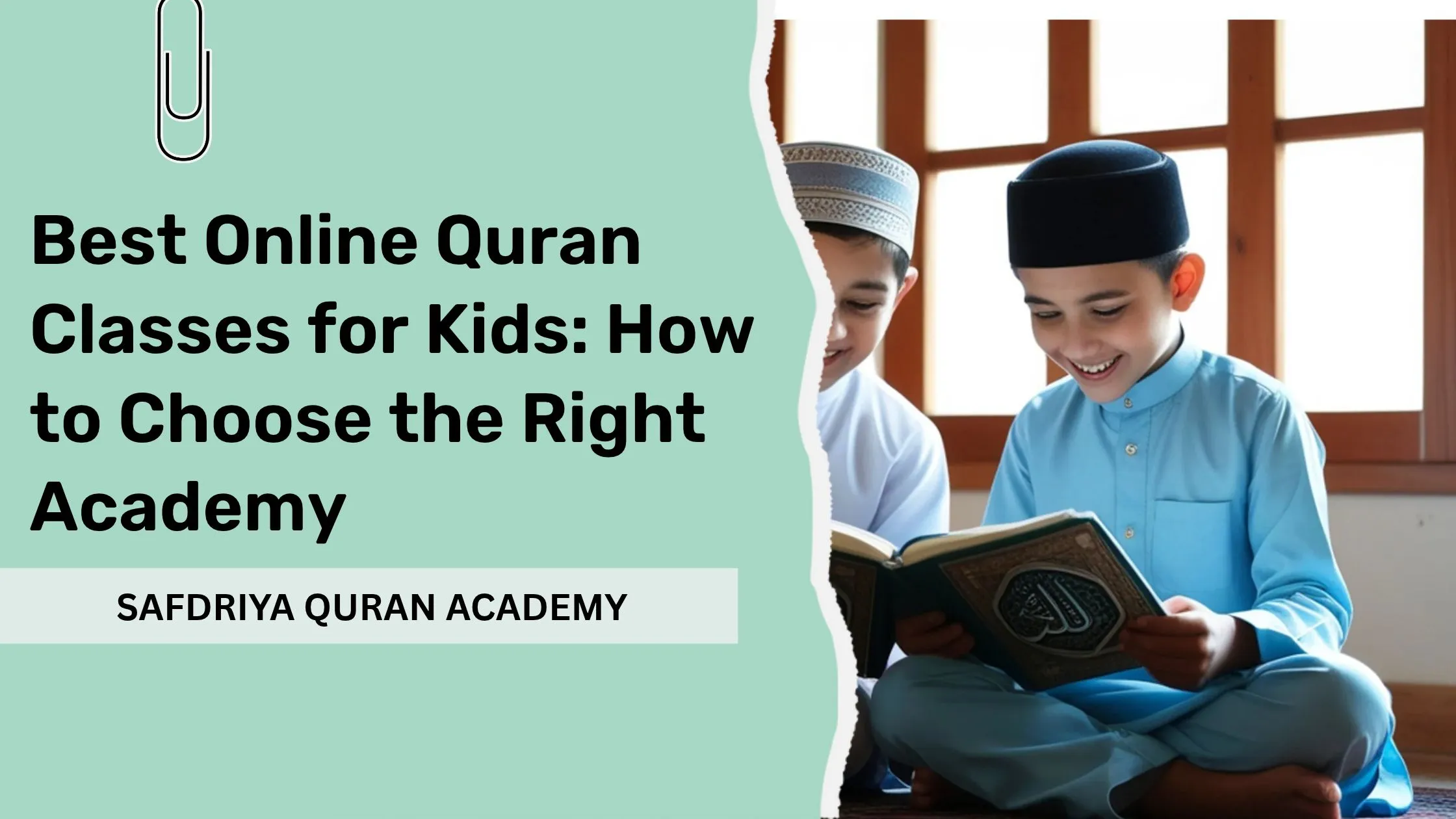
Finding the best online Quran classes for kids involves more than choosing an academy with convenient timings or affordable fees. Parents want their children to learn from qualified Quran teachers, receive proper pronunciation correction, and make steady progress in a supportive learning environment.
However, not every online Quran academy follows the same teaching approach. Some offer group lessons, while others provide live one-to-one instruction. Course options, teacher experience, class duration, and progress monitoring can also vary. The teaching approach should also match your child’s age, current Quran reading level, and ability to stay engaged during lessons.
Before enrolling your child, it is important to understand what makes an online Quran program suitable for young learners. This guide explains what parents should look for, how to choose the right Quran course, and what to check during a trial class.
1. What Should Parents Look for in the Best Online Quran Classes for Kids?

The best online Quran classes for children should provide qualified teachers, an organized learning plan, suitable teaching methods, and regular feedback. Parents should evaluate how an academy teaches, not just what courses it offers.
Here are four important factors to consider when comparing online Quran academies.
Qualified Quran Teachers with Experience Teaching Children
A teacher’s Quran knowledge is important, but teaching children requires additional skills. Young learners may need repeated explanations, gentle correction, and encouragement to stay engaged during lessons.
When evaluating online Quran tutors for kids, check whether the teacher:
- Has a strong foundation in Quran reading and Tajweed.
- Has experience teaching children and beginners.
- Can explain Arabic pronunciation in a simple way.
- Corrects mistakes patiently without discouraging the student.
- Adjusts explanations according to the child’s understanding.
Parents should also ask about the teacher’s qualifications and teaching experience rather than relying only on an academy’s promotional claims.
A qualified teacher who understands children’s learning needs can make Quran lessons more comfortable and productive.
Live One-to-One Lessons and Individual Attention
In a live one-to-one Quran class, the teacher focuses on one student throughout the lesson. This gives children more opportunities to read aloud, ask questions, and receive individual corrections.
For example, if a child struggles to pronounce a particular Arabic letter, the teacher can identify the mistake, demonstrate the correct pronunciation, and allow the child to practise it.
This personalized approach can be particularly helpful for beginners who need support with letter recognition, pronunciation, and reading fluency.
When comparing Quran lessons for kids online, check whether the teacher gives your child enough time to participate rather than spending most of the lesson explaining concepts.
A Structured Quran Learning Curriculum
Children need a clear learning path that matches their current reading ability. An organized curriculum should show parents what their child is currently learning, which skills they need to master, and what the next learning stage will be. The academy should assess the child’s existing Quran reading ability before recommending a course.
For beginners, this may start with Noorani Qaida. As their reading improves, they can move towards Quran reading, Tajweed, recitation, or memorization.
Ask the academy how it assesses students, organizes lessons, and decides when a child is ready for the next learning stage.
A structured curriculum should also allow teachers to adjust the pace when a student needs more practice.
Flexible Class Timings and Parent Communication
Online Quran learning allows children to attend lessons from home, but class timings still need to fit the family’s daily routine.
Parents should check whether the academy offers flexible scheduling and can arrange lessons according to their local time zone.
Communication is equally important. Ask how teachers share feedback, identify recurring pronunciation mistakes, explain learning difficulties, and inform parents when their child is ready to move to the next learning stage.
A good learning arrangement should make it easy for parents to understand what their child is studying and how they can support practice between lessons.
2. Which Quran Course Should You Choose for Your Child?
The right Quran course depends on what your child already knows. A child who cannot recognize Arabic letters needs a different starting point from someone who can read the Quran but needs to improve Tajweed.
Before selecting a course, ask the teacher to assess your child’s current reading level.
Noorani Qaida for Complete Beginners
Noorani Qaida is a suitable starting point for children who are new to Arabic reading. It introduces the Arabic letters and gradually teaches students how to recognize and pronounce them.
Children learn basic letter sounds, vowel marks, joined letters, and other reading foundations before progressing towards Quran reading.
If your child has little or no experience with Arabic, an online Noorani Qaida course can help establish these essential skills through guided practice. Parents who want an additional learning resource can use this free Noorani Qaida PDF in English for practice at home.
If your child has little or no experience with Arabic, online Noorani Qaida classes for kids can help establish these essential skills through guided practice.
Quran Reading for Children Who Know the Basics
Children who already recognize Arabic letters and understand basic reading rules may be ready for a structured Quran reading course.
At this stage, lessons focus on reading words and verses more accurately, improving fluency, and correcting pronunciation mistakes.
Teachers should listen carefully as children read and identify areas that need further practice. Moving too quickly without correcting repeated mistakes can make it harder to develop accurate reading habits.
Quran with Tajweed for Better Recitation
Once children develop basic Quran reading skills, they can gradually learn Tajweed rules to improve their recitation.
Tajweed teaches students how to pronounce Quranic letters from their correct articulation points and apply the rules of Quranic recitation. Parents can also explore these Tajweed rules to understand the concepts children gradually learn during recitation. Depending on the child’s level, lessons may introduce topics such as:
- Makharij, the points of articulation of Arabic letters.
- Basic characteristics of letters.
- Rules of Noon Sakinah and Tanween.
- Rules of Meem Sakinah.
- Madd and other recitation rules.
Children should not be expected to learn every rule at once. A teacher should introduce concepts gradually and help students apply them through an online Quran recitation course.
Quran Memorization for Children
Some children may be ready to begin memorizing short Surahs or working towards a longer Hifz goal.
A suitable Quran memorization program should include manageable new lessons, consistent revision, and teacher guidance. Memorization without regular revision can make it difficult for children to retain previously learned portions.
Many teachers divide memorization into new lessons and revision of previously memorized portions. This helps children continue learning while regularly reviewing what they have already memorized.
Parents should discuss their child’s current reading ability, available practice time, and memorization goals with the teacher before choosing this course. A child’s readiness and ability to maintain regular revision should guide the decision, rather than age alone.
3. One-to-One vs. Group Quran Classes: Which Is Better for Children?
Both one-to-one and group Quran classes can support children’s learning, but they offer different classroom experiences. The right choice depends on your child’s learning needs, confidence, and ability to participate.
Learning factor | One-to-one classes | Group classes |
Teacher attention | Focused on one student | Shared among students |
Learning pace | Adjusted to the child | Usually follows a group pace |
Pronunciation correction | Individual feedback | Teacher divides attention |
Student participation | More direct reading opportunities | Students take turns participating |
Lesson structure | Can be personalized | Often follows a shared lesson plan |
When are one-to-one Quran classes suitable?
Individual lessons can be helpful for children who are complete beginners, need extra pronunciation practice, or learn at a different pace from other students.
The teacher can spend more time on the child’s specific difficulties and adjust the lesson as needed.
When can group classes work well?
However, children who feel shy about reading aloud in front of others may need time to become comfortable participating in a group. They can also provide opportunities for shared activities and interaction.
Neither format is automatically the best choice for every child. Parents should consider their child’s confidence, current reading ability, need for individual correction, and opportunities to practise reading aloud. The most suitable format is the one that allows the child to participate comfortably and receive the guidance they need.
4. How to Evaluate an Online Quran Teacher During a Trial Class
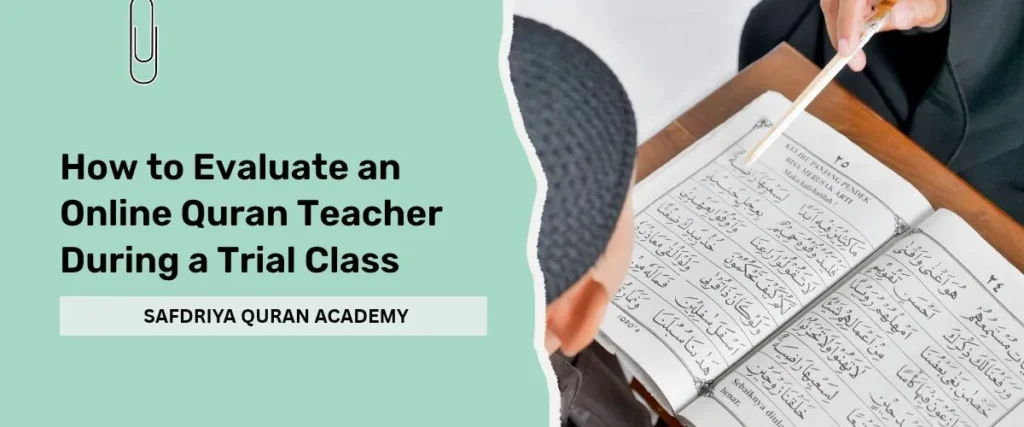
A trial class gives parents an opportunity to observe the teacher’s approach before making an enrollment decision. Instead of judging the lesson only by whether the child enjoys it, pay attention to how the teacher assesses, explains, and corrects.
Here are some practical things to observe.
1. Does the teacher assess your child’s current level?
A good teacher should first understand what the child already knows. They may ask the student to recognize Arabic letters, read a few words, or recite a familiar passage.
This helps the teacher identify an appropriate starting point instead of following the same lesson with every student.
2. Does the teacher correct pronunciation patiently?
Listen to how the teacher responds when your child makes a mistake. Do they explain the correct sound, demonstrate it, and give the child another opportunity to practise?
Repeated corrections should be clear and encouraging rather than rushed or discouraging.
3. Is the lesson interactive?
Your child should have opportunities to read, respond, ask questions, and practise. Notice whether the teacher uses explanations your child can understand and encourages them to participate without feeling pressured. A lesson in which the teacher does most of the talking may not give the student enough active learning time.
4. Is the lesson duration suitable?
Observe whether your child can remain engaged throughout the session. The appropriate duration depends on age, concentration, reading level, and teaching approach.
For example, a 30-minute lesson may provide a useful structure for many children when it includes active reading and practice.
5. Does the teacher explain the next learning goals?
At the end of the trial, ask what your child should work on next. The teacher should be able to explain the areas that need improvement, suggest suitable next learning goals, and describe how progress will be monitored in future lessons.
A useful trial class should help both parents and teachers understand whether the teaching approach is appropriate for the child.
5. Are Online Quran Classes Safe and Suitable for Children?
Online Quran classes can be a suitable learning option for children when parents choose a responsible academy and remain involved in the learning arrangement.
Since lessons take place through the internet, parents should consider both the teacher’s approach and the online environment.
Before enrolling, check the following:
- Teacher arrangements: Ask who will teach your child and how lessons are conducted.
- Communication arrangements: Ask how teachers communicate with students, whether parents are included in important updates, and how lesson-related concerns are handled.
- Parental involvement: Understand how parents can communicate with teachers and receive lesson updates.
- Learning environment: Arrange a quiet place where your child can attend lessons without unnecessary distractions.
- Online platform: Ask which video-calling platform the academy uses, whether parents can supervise lessons, and how access to online sessions is managed.
- Class supervision: Decide how you will remain appropriately involved, especially for younger children.
Parents can also keep the learning device in a shared family space when appropriate and establish clear rules about online communication.
Before enrolling, make sure the academy clearly explains its teacher arrangements, communication procedures, and lesson supervision options. Parents should also choose a level of involvement that is appropriate for their child’s age and independence.
6. How Can Parents Track Their Child's Quran Learning Progress?
Completing lessons does not automatically mean a child is improving. Parents should look for changes in reading ability, pronunciation, confidence, and the ability to remember previously learned material.
Here are some useful signs of progress.
Improved Arabic letter recognition: Beginners should gradually become more confident in recognizing letters, understanding vowel marks, and reading joined letters.
Better Quran reading fluency: Children should become more comfortable reading words and verses without unnecessary hesitation.
More accurate pronunciation: Notice whether your child is correcting repeated mistakes and pronouncing letters more clearly.
Application of Tajweed rules: As children advance, they should gradually apply the Tajweed rules they have studied during recitation.
Stronger revision habits: Children should be able to revisit previous lessons and retain what they have learned.
Regular teacher feedback: Ask the teacher which skills have improved, which areas still need attention, and what the next learning goals are. Ask the teacher to share specific examples of improvement, such as letters your child can now pronounce correctly, reading mistakes they have overcome, or Tajweed rules they can apply independently.
Parents do not need to test their children after every lesson. Regular communication with the teacher and occasional review of previous work can provide a clearer picture of progress.
7. What Should Parents Check About Online Quran Class Fees and Requirements?
Before enrolling your child, understand what the monthly fee includes and what you need to arrange at home. Comparing the full learning arrangement is more useful than choosing an academy based only on the lowest advertised price.
Understand the Class Fees
Ask whether the monthly fee depends on the number of lessons per week, lesson duration, or course type.
You should also check:
- How many classes are included each month?
- How long is each lesson?
- Are there any registration or additional charges?
- What happens if a student misses a lesson?
- Are learning materials included?
- Is a trial class available before payment?
- Is there a rescheduling policy for missed classes?
Affordable online Quran classes for kids should still provide clear information about teaching arrangements, lesson frequency, and what parents are paying for. Parents can review the academy’s monthly Quran class fees to understand the available plans before enrolling.
Check the Class Schedule
Make sure the available timings fit your child’s school routine, homework, and other activities.
Ask whether class timings can be adjusted when your child’s school schedule or family routine changes.
If your family lives in the USA, UK, Canada, or Australia, confirm that the academy can arrange classes according to your local time zone.
Check the Technology Requirements
Most children do not need complicated equipment to attend online Quran lessons. In general, you should have:
- A stable internet connection.
- A laptop, tablet, or smartphone.
- A working microphone and camera.
- Headphones if they help your child hear the teacher clearly.
- Access to the academy’s video-calling platform.
Ask the academy whether it provides instructions for joining lessons and whether a parent needs to help with the initial setup.
Help Your Child Find the Right Quran Teacher
Choosing the right Quran academy means finding a teaching approach that matches your child’s current ability and learning needs. Qualified teachers, individual attention, a suitable course, and regular progress feedback can all contribute to a positive and organized learning experience.
At Safdriya Quran Academy, children learn through live one-to-one Quran lessons with qualified male and female instructors. With over 7 years of Quran teaching experience, our academy helps students progress from Noorani Qaida to Quran reading, Tajweed, recitation, or memorization according to their learning level.
Classes are arranged around family schedules, and parents can experience the teaching approach through a free trial before deciding to enroll.
Book your free trial class with Safdriya Quran Academy to see whether our teaching approach is right for your child.


