The Quran is the holy book of Islam, considered the ultimate guide for Muslims around the world. But what is the holy Quran, and why is it so significant? For Muslims, the Quran is not only a book of laws and guidance but also a source of spiritual inspiration and moral clarity in daily life. In this guide, we will explain the meaning of the Quran, its language, structure, content, and teachings.
We will also cover how it was revealed, who wrote it, and how beginners can learn to read it. Whether you are a beginner or simply curious about Islam, this guide breaks down the Quran in an easy-to-understand way.
What Is the Quran and Its Meaning?
The Quran is the sacred book of Islam, believed to be the word of God (Allah) revealed to Prophet Muhammad over 23 years. It serves as a spiritual, moral, and legal guide for Muslims and explains the meaning of the Quran in Islam for daily life and worship.
Key aspects of the Quran include:
- Guidance on living a righteous life
- Instructions on worship and devotion
- Ethical and moral teachings
- Principles for justice and compassion
Beginners can also explore our step-by-step guide to learning to read the Quran to deepen understanding.
What Does the Word “Quran” Mean?
The term Quran comes from the Arabic root word “qara’a,” meaning to read or recite. In Islam, it is seen as a recitation of God’s guidance for humanity. The word carries both literal and spiritual meaning, representing the divine message revealed to Prophet Muhammad.
What Language Is the Quran Written In?
The Quran was revealed in classical Arabic, considered sacred and unchanged since revelation. Learning Arabic helps Muslims understand the true meaning of the verses, although translations are widely available for reference. Even beginners can gradually develop comprehension with structured guidance.
How Do You Pronounce or Spell Quran?
The correct spelling is Quran, though some may use “Koran.” Pronunciation can vary slightly: “Al-Qur’an” is commonly used in Arabic. For beginners, learning proper pronunciation is important to respect the sacredness of the text, and it can be mastered with regular practice.
When and How Was the Quran Revealed?
The Quran, revealed over 23 years, was sent to Prophet Muhammad in Mecca and Medina through the angel Jibreel (Gabriel). The revelations were given gradually, responding to specific events and questions, allowing followers to learn and implement guidance step by step. This gradual process ensured the message was understood and practiced effectively.
Key points about the revelation:
- Duration: 23 years of revelations
- Deliverer: Angel Jibreel (Gabriel)
- Location: Mecca (focused on faith and monotheism) and Medina (laws and community guidance)
- Purpose: Provide guidance to individuals and the Muslim community according to their circumstances
Understanding how and when the Quran was revealed helps readers appreciate its structure, content, and lasting significance in Islam. Beginners can also explore our step-by-step guide to reading the Quran to deepen their comprehension.
Who Wrote the Quran?
Muslims believe that the Quran, the holy book of Islam, is the literal word of God and was revealed to Prophet Muhammad, who did not write it himself. Instead, his companions memorized and recorded the verses. Later, during the Caliphate of Uthman ibn Affan, these verses were compiled into a single book to preserve the message accurately.
Key points about the compilation:
- Memorization: Early companions memorized the revelations
- Documentation: Written on parchment, bones, and palm leaves
- Standardization: Caliph Uthman compiled and distributed the official copies
- Preservation: Ensured uniformity and prevented errors or variations
This process reinforces the belief that the Quran is divinely preserved and not authored by any human. Beginners who want to understand the Quran more deeply can explore our step-by-step guide to learning Quran reading and recitation.
How Is the Quran Structured and Organized?
The Quran, the holy book of Islam, is divided into 114 chapters called Surahs, which contain over 6,000 verses (Ayahs). These Surahs are classified based on the period of revelation:
- Meccan Surahs: Focus on faith, monotheism, spirituality, and moral guidance
- Medinan Surahs: Include laws, social guidance, and community rules
The order of the Surahs in the Quran is not strictly chronological but arranged to highlight key themes and spiritual lessons. This organization helps readers understand the historical context, moral guidance, and overarching teachings of the Quran. For a deeper breakdown of its structure, you can also explore our detailed guide on how the Quran is organized.
Beginners who want to explore the Quran’s structure in more depth can follow our step-by-step guide to reading the Quran, which explains Surahs, verses, and their meanings clearly.
What Does the Quran Contain and Teach?
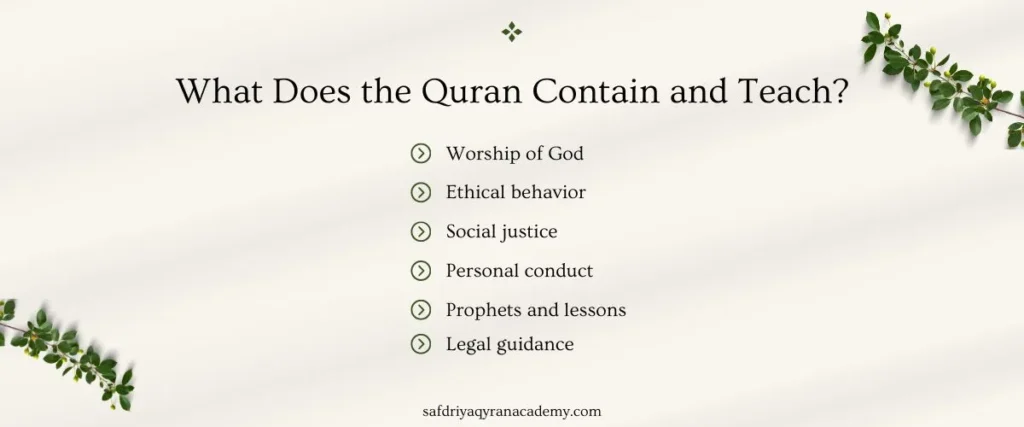
The Quran, the holy book of Islam, teaches monotheism, morality, justice, and spirituality, providing comprehensive guidance for Muslims on living a righteous life. It covers a wide range of topics:
Key teachings of the Quran:
- Worship of God: Provides detailed guidance on acts of worship, including prayer (Salah), fasting (Sawm), pilgrimage (Hajj), and devotion to God, emphasizing the importance of maintaining a strong spiritual connection.
- Ethical behavior: Offers principles for honesty, integrity, humility, and kindness, guiding individuals to act morally in daily interactions and maintain good character.
- Social justice: Advocates fairness, charity, caring for the needy, protecting the rights of others, and promoting equality, ensuring a just and harmonious society.
- Personal conduct: Encourages patience, self-discipline, forgiveness, and personal responsibility, helping individuals manage their behavior and make ethical decisions.
- Prophets and lessons: Contains stories of previous prophets such as Adam, Noah, Moses, Jesus, and others, illustrating moral lessons, spiritual guidance, and how communities responded to divine messages.
- Legal guidance: Provides rules and regulations regarding family, inheritance, marriage, trade, and social obligations, serving as a framework for both personal and communal life.
The Quran provides both spiritual guidance and practical advice, making its teachings relevant for everyday life. Beginners who want to explore these lessons in detail can follow our step-by-step guide to reading the Quran and also benefit from inspiring Quran quotations that highlight its messages of faith, kindness, and strength, helping readers connect with its teachings on a deeper level.For parents who want their children to understand these teachings early, our guide on Quran teachings for kids explains the essential lessons every child should learn.
Why Is the Quran Important in Islam?
The Quran, the holy book of Islam, is considered the ultimate source of authority and guidance for Muslims worldwide. But why is the Quran so important in Islam? Its significance lies in guiding Muslims in both spiritual and worldly matters.
Key reasons the Quran is important:
- Spiritual guidance: Recited in daily prayers, helping Muslims maintain a strong connection with God.
- Moral guidance: Provides principles for honesty, compassion, justice, and ethical behavior in everyday life.
- Legal guidance: Contains instructions on laws, social responsibilities, and community conduct.
- Source of knowledge: Preserves stories of prophets, historical lessons, and divine teachings for reflection and learning.
- Cultural and religious identity: Central to Islamic rituals, education, and traditions, shaping Muslim identity and practice.
Its teachings are relevant for daily life, helping Muslims make ethical choices and navigate both personal and communal challenges. Beginners who want to understand the Quran’s significance can follow our step-by-step guide to learning the Quran to explore its teachings deeply.
How Can Beginners Learn to Read the Quran?
For beginners wondering how to read the Quran, there are effective methods to start learning and practicing with confidence. With the right approach, even those new to Arabic can gradually master recitation and understand the meaning of the verses.
Steps for Beginners to Learn the Quran:
- Learning Noorani Qaida: This foundational approach helps beginners master Arabic letters, proper pronunciation, and recitation rules. You can also learn why this method matters in our guide on why learning Noorani Qaida is essential before reading the Quran.For structured learning, explore the complete Noorani Qaida course designed for beginners.
- Using Online Courses and Apps: Interactive courses and mobile applications provide guided lessons, audio recitations, and practice exercises. Beginners who want a structured and easy-to-follow approach can join our Quran reading course for beginners, which focuses on accuracy and fluency.
- Daily Recitation and Translation: Regular practice improves fluency, while studying translations helps learners understand the meaning and context of the Quranic verses. If you want a complete roadmap, follow our step-by-step guide to learn how to read the Quran.
Even if you are new to Arabic, consistent practice and proper guidance make reading the Quran manageable and rewarding. These resources can help beginners learn effectively, improve recitation, and build confidence in understanding its teachings.
Conclusion
The Quran is more than just a book; it is the foundation of Islamic belief, guidance, and practice. Understanding its meaning, structure, teachings, and significance is essential for every Muslim and anyone seeking knowledge about Islam.
Beginners are encouraged to start learning Arabic, use guided courses, and practice recitation regularly. With patience and dedication, even those new to the language can gradually explore the Quran’s spiritual depth, moral guidance, and practical wisdom.
To begin your journey, explore our step-by-step guide to reading the Quran, designed to help beginners learn effectively and connect with its timeless teachings.
Frequently Asked Questions
Have questions about What Is the Quran?
Muslims believe it was revealed by God to Prophet Muhammad and compiled by his companions.
The Quran was revealed over 23 years in Mecca and Medina.
It is the ultimate source of guidance for Muslims, covering spiritual, moral, and social aspects of life.
The Quran contains moral guidance, legal instructions, stories of prophets, and lessons for humanity.
The Quran is pronounced Al-Qur’an, with emphasis on proper Arabic phonetics.


